In a message posted on his Facebook account on Tuesday, Naderi wrote, “Tonight at NASA/JPL (Jet Propulsion Laboratory) farewell party I learned that they have named an asteroid after me!! I was overwhelmed.”
He added, “Asteroid formerly known as (5515) 1989 EL1 will henceforth be known as asteroid ‘Naderi’.”
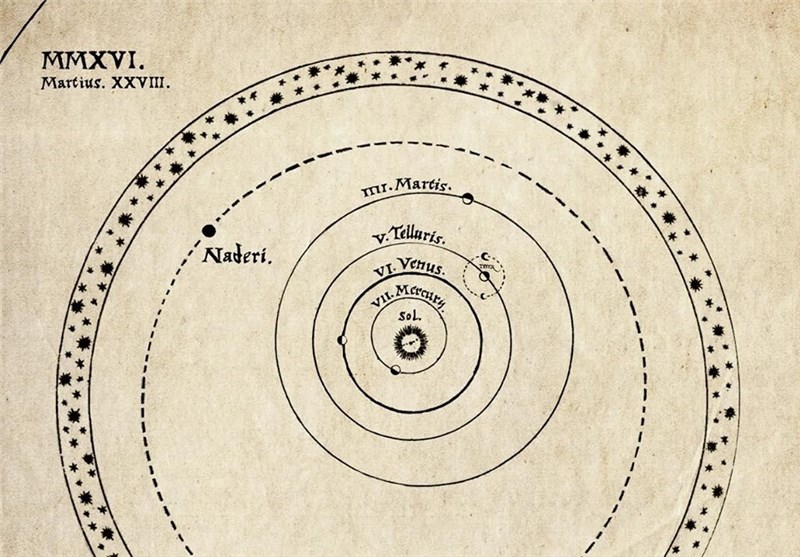
Additionally, in a separate message on Wednesday, the Iranian scientist explained how an asteroid is named after a person and said, “The process follows an international protocol overseen by International Astronomical Union (IAU) which has the mission to promote and safeguard the science of astronomy through international cooperation. When IAU receives a petition to name an asteroid after a person the petition is reviewed by the IAU's Committee for Small Body Naming (CSBN) and if they see merit they will approve. Note neither NASA nor any other space agency of any other country has the power to rename space objects (planets, moons, comets, asteroid, etc.). In my case the petition was put forward by NASA/JPL and approved through the above process.”
The asteroid was discovered by late American astronomer Eleanor F. Helin at the Palomar Observatory in San Diego County California on March 5, 1989, and is about 10 kilometers (6 miles) in diameter. It rotates about itself every 5.2 hours and orbits the Sun every 4.4 years.