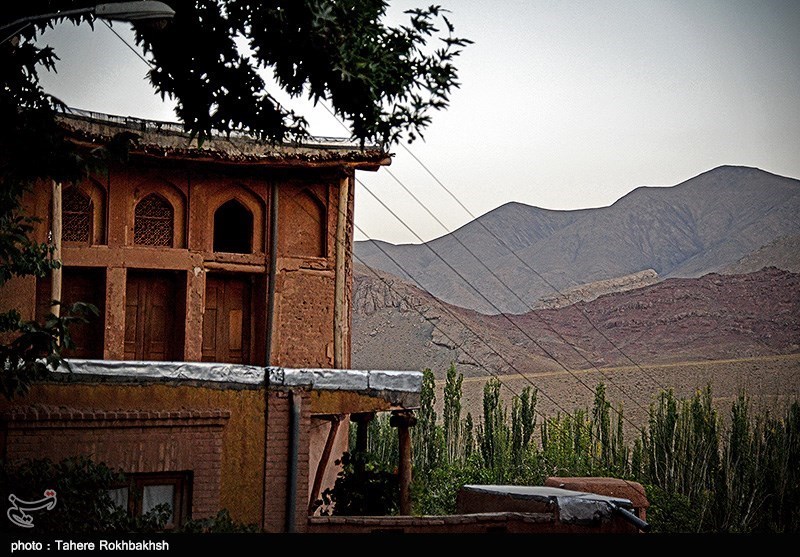
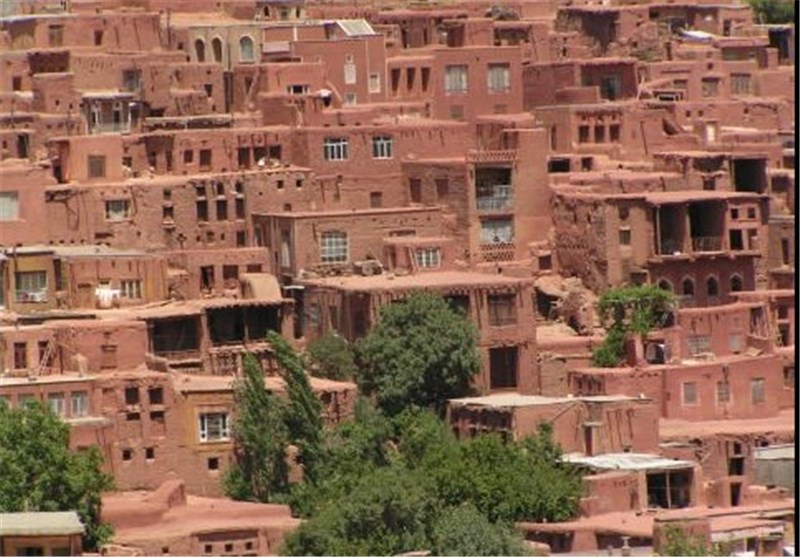
This is a village of living traditions, architectural styles (all in red clay), and probably the most interesting example of human adaptation to nature, wherein one can transcend the boundaries of time and space and experience the ancient civilization and culture of Iran.
The village is compact, with narrow and sloped lanes, and houses located on the slope as if placed on a stairway. Here, the roofs of some houses are used to serve as the courtyard for other houses higher up on the slope. The language spoken by the literate people of Abyaneh is Parthian Pahlavi. They are deeply committed to honoring their traditions.
No matter how well educated a person from Abyaneh might be, he or she puts on the traditional Abyaneh costume on coming back to the village from anywhere in Iran. The women's traditional costume consisting of a scarf with floral motifs and pleated pants is particularly attractive. The Abyaneh woman is inseparably attached to her wedding gown inherited from her mother, and is expected to pass it on to her daughter. It bears such an intrinsic value of her that she wouldn't sell it at any price.
Abyaneh was completely Zoroastrian right until the time of the intolerant Safavid Shah Ismael I in whose reign most of the villagers emigrated to India or to Yazd. Even today their costume, way of life and ancient dialect are still practically unchanged and for many anthropologists a reason to travel to Iran.

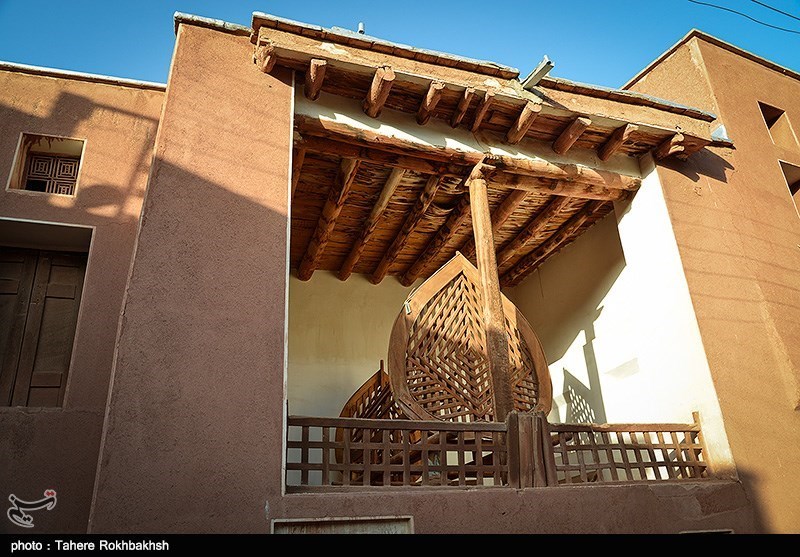
This village is one of the well-known in Isfahan province, the architectural facet in this village along with the rituals and apparel of its inhabitants is a sight to witness. The Jame' mosque of this vicinity with its historical wooden altar dating to 776 AH, and its wooden pulpit dating to 466 AH. And an inscription in the 'Kofi' script is greatly valued both as a historical and religious monument.
Source: Iran Tour Online