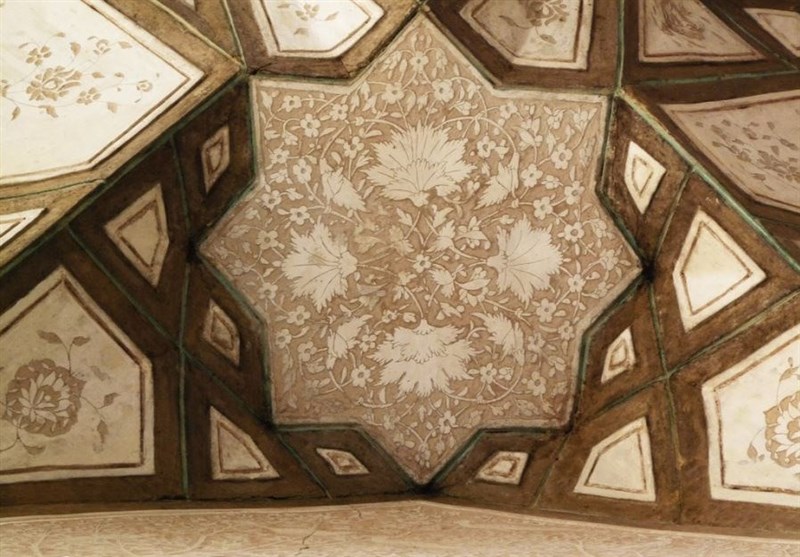
The rooms to the right from the entrance immediately catch visitors' attention with their delicate monochrome painted plaster decoration. The murals of the main hall depict the scenes from the life of Joseph the Beautiful, including the scene of Zaltkhas unsuccessful attempt to seduce him.
The small sitting room next to it is just as beautifully decorated. The mansoin currently houses an ethnographic museum with an exceptionally fine collection.
Among the most valuable objects on display is 19th-century Zoroastrian female clothing with exquisite hand-embroidery. A teahouse located on the same level as the courtyard is an excellent place to rest after the excursion.
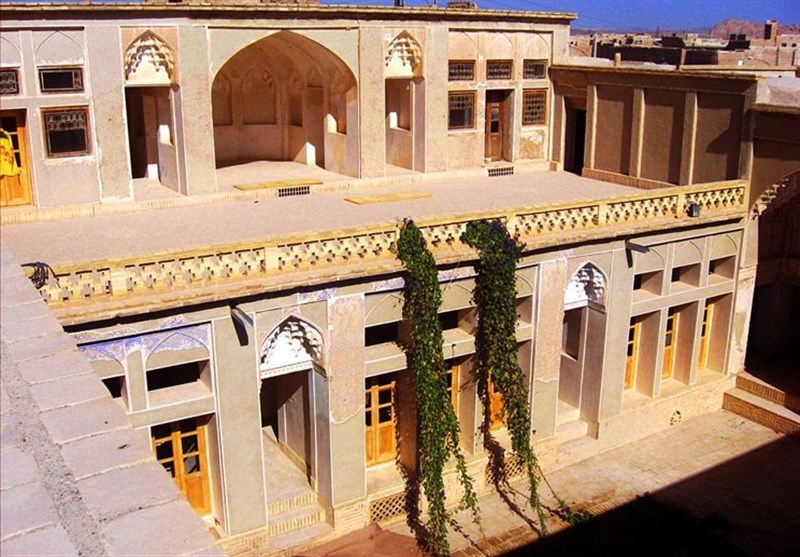
The traditional Pirnia House is a perfect example of the desert architecture of the region, built in the Safavid era. The house consists of an exterior, an interior, a deep garden, a silo room and all the facilities a mansion needs at the time of its construction.
When you enter the house and pass the first corridor, you reach an octagonal room called "hashti", which used to be a waiting room for customers and visitors. Beautiful paintings, amazing plastering of Quran stories, a book of famous poems and exquisite calligraphy decorate the living room. At first there lived a judge of Nain.
Then the house belonged to a governor of Nain during the Qajar Dynasty. A few decades ago the house was bought by the Ministry of Culture and Art. After the renovation in 1994 the house was transformed into the ethnological desert museum.
Source: Iran Gazette